
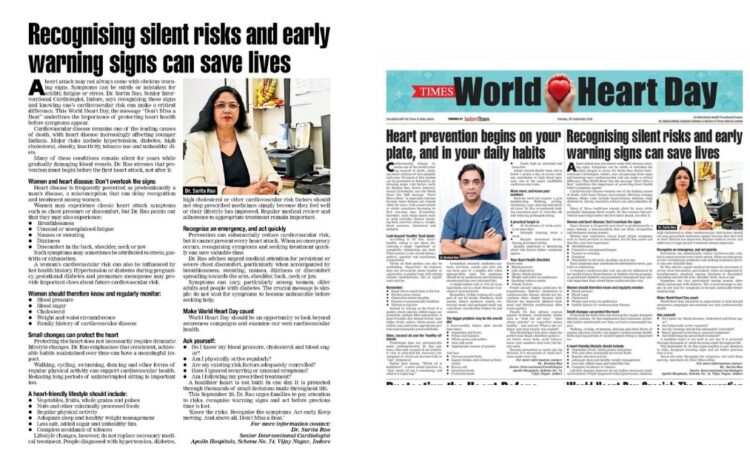
Recognising Silent Risks and Early Warning Signs Can Save Lives: Dr. Sarita Rao
Indore, September 29, 2026: Heart disease does not always come with obvious warning signs. Symptoms can sometimes be subtle and may be mistaken for acidity, fatigue or stress, potentially delaying timely medical attention. Highlighting the importance of recognising such symptoms, Dr. Sarita Rao, Senior Interventional Cardiologist, Apollo Hospitals, Indore, shared important insights on cardiovascular health and prevention in a special World Heart Day feature published in the Times of India, Indore.
The feature, published on September 29, 2026, focused on the importance of identifying silent cardiovascular risks, recognising early warning signs and taking preventive steps before a serious cardiac event occurs.
Cardiovascular Risks Can Remain Silent
According to Dr. Sarita Rao, several cardiovascular risk factors can affect the heart and blood vessels for years without producing noticeable symptoms.
Major risk factors highlighted in the feature include:
- High blood pressure
- Diabetes
- High cholesterol
- Obesity
- Physical inactivity
- Tobacco use
- Unhealthy dietary habits
- Family history of cardiovascular disease
Regular health monitoring can help identify these risks and allow individuals to take appropriate preventive measures.
Dr. Sarita Rao emphasised that cardiovascular prevention should ideally begin before the first heart attack or major cardiac event, rather than after it occurs.
Women and Heart Disease: Recognising the Signs
The Times of India feature also highlighted the importance of recognising heart disease symptoms in women.
Heart disease is sometimes perceived as predominantly a man’s health concern, which can contribute to delayed recognition of symptoms among women. While women may experience classic symptoms such as chest pressure or discomfort, they can also experience other warning signs.
These may include:
- Breathlessness
- Unusual or unexplained fatigue
- Nausea or sweating
- Dizziness
- Discomfort in the back, shoulder, neck or jaw
Such symptoms can sometimes be attributed to stress, exhaustion or gastric problems. Recognising that they may also be associated with cardiovascular problems can encourage people to seek appropriate medical evaluation.
Women’s Health History Can Provide Important Clues
Dr. Rao also pointed to the importance of a woman’s medical history when considering long-term cardiovascular risk.
Conditions such as hypertension or diabetes during pregnancy, gestational diabetes and premature menopause may provide important information about future cardiovascular risk.
Women should therefore discuss their individual risk factors with their healthcare providers and regularly monitor important health parameters.
These include:
- Blood pressure
- Blood sugar
- Cholesterol
- Weight and waist circumference
- Family history of cardiovascular disease
Small Lifestyle Changes Can Support Heart Health
The feature also highlighted that protecting cardiovascular health does not necessarily require dramatic lifestyle changes.
Consistent and achievable habits maintained over time can contribute to better heart health. Regular physical activities such as walking, cycling, swimming and dancing can support cardiovascular fitness, while reducing long periods of uninterrupted sitting can also be beneficial.
A heart-friendly lifestyle can include:
- Vegetables and fruits
- Whole grains and pulses
- Nuts and minimally processed foods
- Regular physical activity
- Adequate sleep
- Healthy weight management
- Lower intake of salt and added sugar
- Limiting unhealthy fats
- Complete avoidance of tobacco
At the same time, lifestyle modifications should not replace necessary medical treatment.
Do Not Stop Prescribed Medication Without Medical Advice
Dr.Sarita Rao stressed the importance of regular medical review and adherence to appropriate treatment.
People taking prescribed medication for high blood pressure, diabetes, high cholesterol or other cardiovascular risk factors should not stop their medicines simply because they feel better or have made lifestyle improvements.
Treatment decisions should be made in consultation with a qualified healthcare professional.
Recognising a Cardiac Emergency
While prevention can reduce cardiovascular risk, it cannot prevent every heart attack. Recognising potentially serious symptoms and seeking timely medical attention therefore remains crucial.
Persistent or severe chest discomfort, particularly when accompanied by breathlessness, sweating, nausea, dizziness or discomfort spreading towards the arm, shoulder, back, neck or jaw, should not be ignored.
Symptoms may differ from person to person and can sometimes be less typical among women, older adults and people with diabetes.
The key message is to avoid waiting for symptoms to become unbearable before seeking medical help.
Making World Heart Day Count
World Heart Day provides an opportunity to look beyond awareness campaigns and take a closer look at individual cardiovascular health.
Dr. Rao’s message encourages people to ask themselves some important questions:
- Do I know my blood pressure, blood sugar and cholesterol levels?
- Am I physically active regularly?
- Are my existing cardiovascular risk factors adequately controlled?
- Have I experienced recurring or unusual symptoms?
- Am I following my prescribed treatment?
Heart health is not protected through a single decision. It is supported by consistent choices and regular attention throughout life.
Dr. Sarita Rao’s Message on Heart Health
Through the World Heart Day feature, Dr. Sarita Rao, Senior Interventional Cardiologist at Apollo Hospitals, Indore, highlighted the importance of knowing cardiovascular risk factors, recognising warning signs and acting early when symptoms occur.
Her message is particularly relevant for individuals who may have underlying risk factors but do not experience obvious symptoms.
Know the risks. Recognise the symptoms. Act early. Keep moving. And above all, don’t miss a beat.
About Dr. Sarita Rao
Dr. Sarita Rao is a Senior Interventional Cardiologist at Apollo Hospitals, Indore, with 25+ years of experience in cardiovascular care. She focuses on providing personalised cardiac evaluation, treatment and guidance, helping patients understand their heart health and make informed decisions. She practices at Apollo Hospitals, Sector D Rd, Vijay Nagar, Scheme No. 74C, Indore, Madhya Pradesh.
Media Coverage: This article is based on the World Heart Day special feature published in the Times of India, Indore edition, on September 29, 2026.
Disclaimer: This article is intended for general health awareness and is based on the information presented in the referenced media feature. It does not replace individual medical consultation, diagnosis or treatment.
Write a Comment