
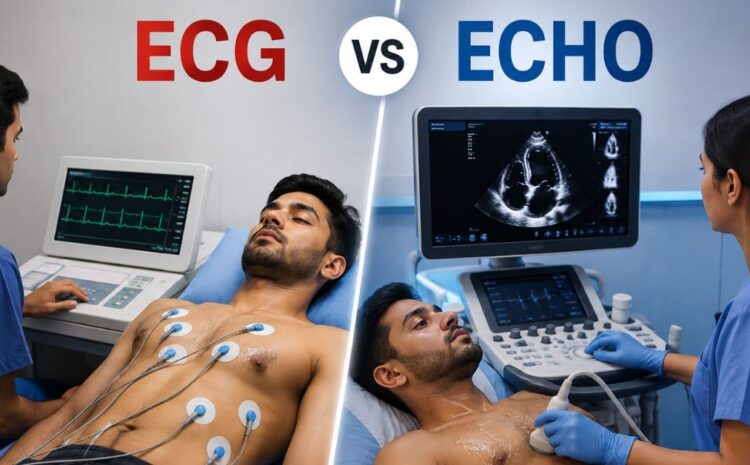
ECG vs Echo: What’s the Difference and Which Heart Test Do You Need?
When your doctor recommends a heart test, it’s natural to wonder whether you need an ECG or an Echo. Although both tests evaluate heart health, they serve different purposes. Understanding the difference can help you feel more confident about your diagnosis and treatment.
If you’re planning a Heart checkup in Indore, consulting Dr. Sarita Rao, regarded as one of the heart specialists in Indore, can help determine whether an ECG test in Indore, an Echo test in Indore, or both are needed for an accurate assessment.
What Is an ECG?
An Electrocardiogram (ECG) is a simple, painless test that records the electrical activity of your heart. Small electrodes are placed on your chest, arms, and legs to detect electrical signals that control your heartbeat.
An ECG test in Indore is commonly recommended if you have symptoms such as:
- Chest pain
- Palpitations or irregular heartbeat
- Dizziness or fainting
- Shortness of breath
- High blood pressure
- Suspected heart attack
The test usually takes 5–10 minutes and provides quick information about your heart rhythm and electrical function.
What Is an Echo?
An Echocardiogram (Echo) is an ultrasound scan of the heart. It uses sound waves to create real-time images of the heart’s chambers, valves, muscles, and blood flow.
An Echo test in Indore helps doctors evaluate:
- Heart pumping function
- Heart valve disorders
- Congenital heart defects
- Enlarged heart chambers
- Fluid around the heart
- Heart muscle damage after a heart attack
Unlike an ECG, an Echo shows the structure and movement of the heart, making it an essential tool for diagnosing many cardiac conditions.
ECG vs Echo: Key Differences
| Feature | ECG (Electrocardiogram) | Echo (Echocardiogram) |
| Purpose | Records electrical activity | Creates images of the heart |
| Detects | Heart rhythm problems, heart attack | Valve disease, heart function, structural abnormalities |
| Technology Used | Electrical sensors | Ultrasound waves |
| Duration | 5–10 minutes | 20–40 minutes |
| Pain | Completely painless | Completely painless |
| Best For | Rhythm disorders and emergency evaluation | Assessing heart structure and pumping function |
Which Test Do You Need?
The right test depends on your symptoms and medical history.
Your doctor may recommend an ECG if you have:
- Chest pain
- Fast or irregular heartbeat
- Sudden dizziness
- Suspected heart attack
An Echo is usually advised if there is a suspicion of:
- Heart valve disease
- Heart failure
- Congenital heart disease
- Reduced pumping function
- Heart murmurs
In many cases, both tests are performed together because they provide different but complementary information about your heart.
Don’t Ignore Heart Symptoms
Early diagnosis is the key to preventing serious heart complications. If you experience persistent chest discomfort, breathlessness, unexplained fatigue, or irregular heartbeats, schedule a Heart checkup in Indore without delay.
Dr. Sarita Rao, recognized as one of the heart specialist in Indore, provides comprehensive cardiac evaluation and recommends the most appropriate investigations, including ECG test in Indore and Echo test in Indore, based on your symptoms and overall heart health.
Timely heart screening not only helps diagnose heart disease early but also allows treatment to begin before complications arise, helping you maintain a healthier and more active life.
Frequently Asked Questions (FAQs)
1. Which is better, an ECG or an Echo?
Neither test is better—they serve different purposes. An ECG evaluates the heart’s electrical activity, while an Echo examines the heart’s structure and pumping function.
2. Can an ECG detect all heart problems?
No. An ECG is excellent for identifying rhythm abnormalities and signs of a heart attack, but it cannot detect many structural heart conditions. An Echo may be needed for a complete evaluation.
3. Is an Echo test painful?
No. An Echo test in Indore is a safe, non-invasive, and painless ultrasound procedure that usually takes 20–40 minutes.
4. When should I get a heart checkup?
You should consider a Heart checkup in Indore if you experience chest pain, breathlessness, palpitations, dizziness, have high blood pressure, diabetes, or a family history of heart disease. Early screening can help detect heart problems before they become serious.
Write a Comment