
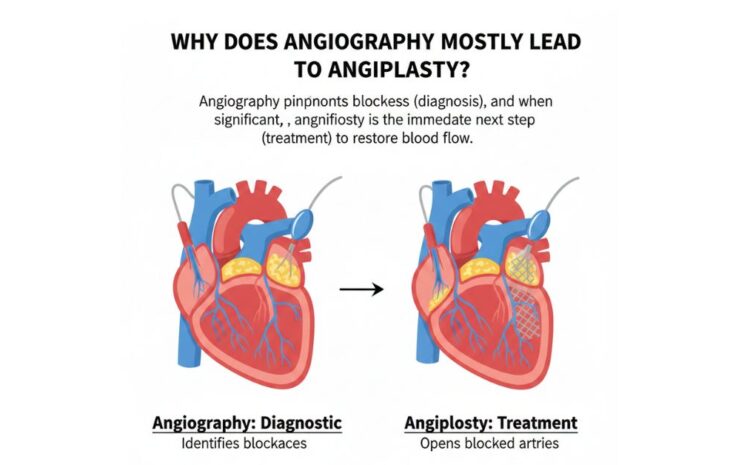
Why Does Angiography Mostly Lead to Angioplasty?
When someone experiences chest pain, breathlessness, or symptoms of a heart blockage, doctors often recommend angiography as the first major diagnostic step. This test helps visualize the coronary arteries clearly and identify where blood flow is restricted. But a common concern many patients have is:
“Why does angiography often lead to angioplasty?”
Let’s understand this in a simple, patient-friendly way.
What Happens During Angiography?
Angiography is a minimally invasive test in which a special dye is injected into the coronary arteries. This dye is captured by X-ray imaging, which allows the cardiologist to see:
- How much blockage is present
- Whether the blockage is dangerous
- If immediate treatment is required
When performed by an expert one of the best cardiologist in indore, Dr. Sarita Rao angiography provides a crystal-clear roadmap of the patient’s heart health.
Why Angiography Often Leads Directly to Angioplasty
1. Immediate Treatment Saves the Heart Muscle
Blockages reduce the oxygen supply to the heart. If a major artery shows a critical blockage (usually more than 70%), waiting too long can risk:
- A heart attack
- Permanent heart muscle damage
- Life-threatening complications
Because angioplasty can be done instantly in the same session, doctors often suggest performing it right away.
2. Prevents the Need for a Second Procedure
If angiography clearly shows a serious blockage, it makes sense to treat it during the same sitting. This avoids:
- Repeating hospitalization
- Extra charges
- Patient stress
- Delays in treatment
For patients choosing angioplasty in Indore, this “single-sitting approach” is very safe and widely preferred.
3. Technology and Infrastructure Support Quick Action
Modern cath labs are fully equipped. As soon as the doctor identifies a blockage, they can instantly:
- Insert a balloon
- Expand the artery
- Place a stent to keep the artery open
This seamless transition from diagnosis to treatment is a major reason angiography often leads to angioplasty.
4. Reduces the Risk of Sudden Heart Events
Critical or unstable blockages can cause plaque rupture, leading to sudden cardiac arrest. Angioplasty stabilizes the artery, restores blood flow, and protects the patient from unexpected emergencies.
5. Patient’s Condition Sometimes Demands Immediate Relief
Many patients who come for angiography already experience:
- Severe chest pain
- Unstable angina
- Difficulty in breathing
- High-risk symptoms
In such situations, delaying treatment is not advisable. Performing angioplasty on the spot provides quick relief and improves survival rates.
Is Angioplasty Safe After Angiography?
Yes, especially when done by the Best cardiologist doctor in MP, as they follow global safety protocols. Modern stents, advanced imaging, and experienced hands ensure:
- Faster recovery
- Higher success rates
- Minimal complications
- Better long-term heart health
Benefits of Same-Sitting Angioplasty
- Shorter hospital stay
- Lower cost compared to two separate procedures
- Immediate restoration of blood flow
- Prevention of major heart attack
- Quick return to normal life
Patients in Madhya Pradesh and nearby regions frequently prefer angioplasty in Indore because of advanced cardiac care setups and experienced cardiologists.
Angiography is a diagnostic tool, but when it reveals significant blockages, angioplasty becomes the life-saving next step. Instead of risking delays, doctors treat the blockage during the same session to protect the heart and improve long-term outcomes. With expert guidance from the best cardiologist in indore, patients receive timely, accurate, and effective treatment that ensures a healthier future.
Write a Comment