

Angioplasty is a minimally invasive cardiac procedure used to open blocked or narrowed coronary arteries and restore healthy blood flow to the heart muscles. Angioplasty in Indore is commonly recommended for patients with significant coronary artery blockages to help relieve symptoms such as chest pain, breathlessness, and fatigue, while reducing the risk of serious heart complications.
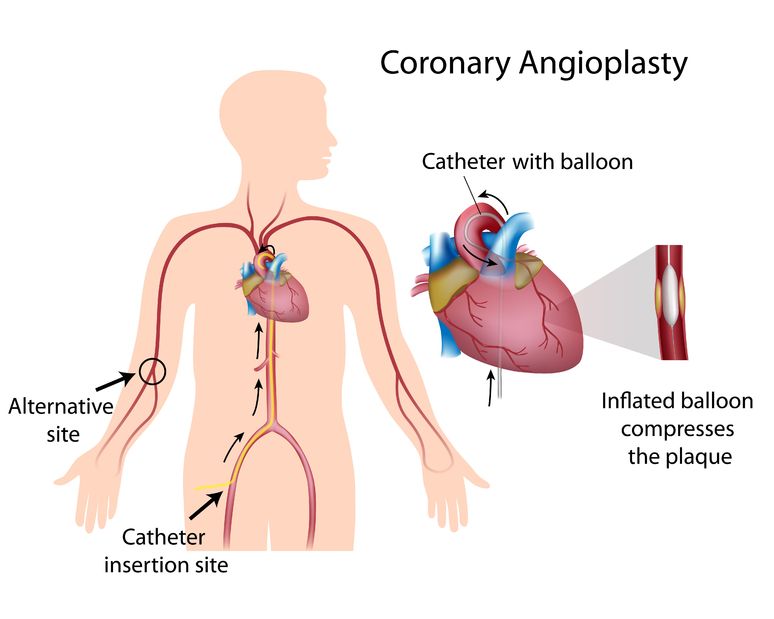
During angioplasty, a thin catheter is inserted through an artery in the wrist, arm, or groin and guided toward the blocked blood vessel using advanced imaging technology. A small balloon attached to the catheter is then inflated to widen the narrowed artery and improve blood circulation.
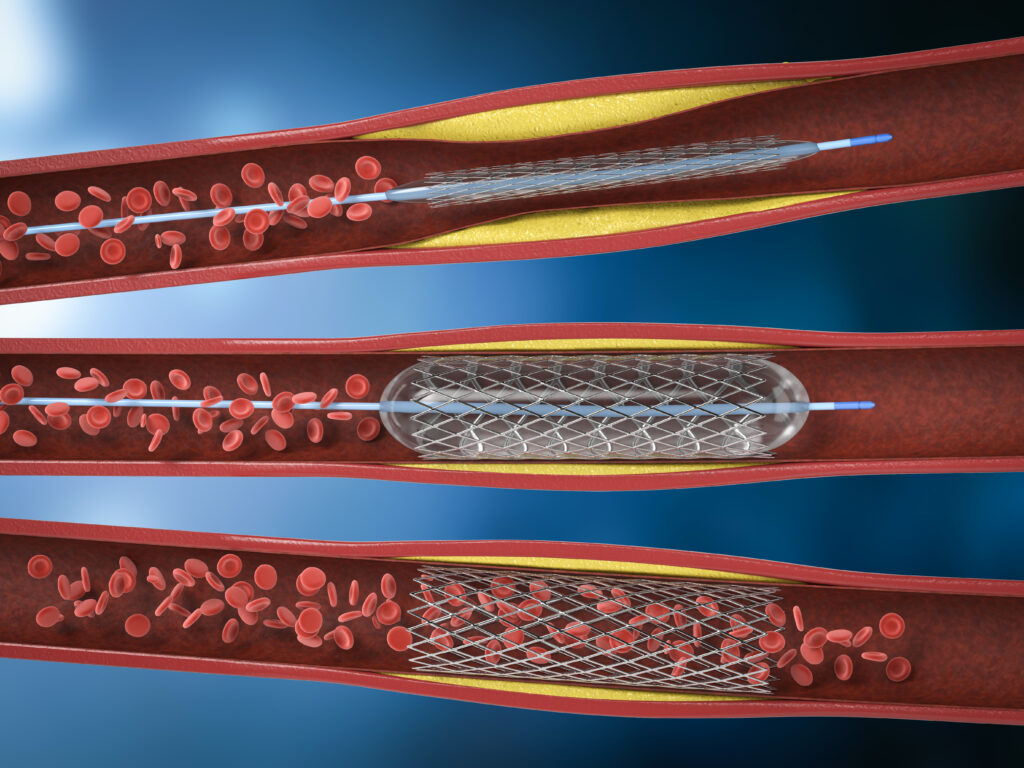
In many cases, a coronary stent is also placed to help keep the artery open and reduce the chances of future narrowing. Modern angioplasty techniques are minimally invasive and may offer faster recovery compared with traditional open-heart surgery, depending on the patient’s condition.
Angioplasty may be recommended when a coronary artery becomes significantly narrowed or blocked, restricting blood flow to the heart. A cardiologist evaluates the severity and location of the blockage, symptoms, test results, and overall heart health before deciding whether angioplasty is appropriate.
The decision to undergo angioplasty is individualized for every patient. Depending on the number and location of blockages, a cardiologist may recommend medication, angioplasty with stent placement, or another treatment approach.
Step 1: Preparation & Local Anesthesia
The patient is prepared for the procedure and local anesthesia is administered at the catheter insertion site.
Step 2: Catheter Insertion
The operator numbs the skin, & a thin catheter is inserted through the wrist, arm, or groin artery and carefully guided toward the blocked coronary artery.
Step 3: Balloon Expansion
A small balloon attached to the catheter is inflated to compress plaque deposits and widen the artery.
Step 4: Stent Placement
In most cases, a coronary stent (a small metal mesh tube) attached to ballon is permanently placed at the site to keep the artery open, preventing future narrowing.
Step 5: Blood Flow Restoration
The balloon is deflated, and catheters are removed after successful artery expansion, and blood circulation is restored.
The procedure is minimally invasive and usually completed within a short duration under continuous cardiac monitoring.
By improving blood flow to the heart, heart angioplasty in Indore may help relieve symptoms and improve quality of life. Consult Dr. Sarita Rao to understand whether angioplasty is appropriate for you.
Angioplasty is a commonly performed and highly effective cardiac procedure when performed by experienced interventional cardiologists. Angioplasties are generally safe procedures as they’re less invasive than other heart and vascular procedures, like bypass surgery.
Although generally safe, certain risks may include:
Dr. Sarita Rao uses advanced imaging guidance, modern stent technologies, and evidence-based treatment protocols to ensure optimal patient safety and successful outcomes.
Most patients recover quickly after angioplasty and can gradually resume normal activities within a few days based on medical advice.
Lifestyle modification and preventive cardiac care play an important role in long-term recovery after angioplasty.
Angioplasty is usually not painful because local anesthesia is used during the procedure, so you’re awake but comfortable during the test. Most patients experience only mild pressure or temporary discomfort.
The procedure generally takes between 30 minutes to 2 hours, depending on the complexity of the blockage.
Angioplasty is a minimally invasive catheter-based procedure, while bypass surgery is an open-heart surgical procedure used for more extensive blockages.
Most patients can resume light activities within a few days, although complete recovery may vary depending on the overall heart condition.
Yes. Coronary stents are designed to remain permanently inside the artery to maintain proper blood flow. They become covered by a thin layer of tissue as the vessel heals around them.
There is a possibility of re-narrowing in some cases, which is why medications, lifestyle changes, and regular follow-up are important.
Timely angioplasty can restore blood flow to the heart and significantly reduce the risk of severe heart damage during a heart attack.
Far far away, behind the word mountains, far from the countries Vokalia and Consonantia, there live the blind texts. Separated they live in Bookmarksgrove right at the coast
Far far away, behind the word mountains, far from the countries Vokalia and Consonantia, there live the blind texts. Separated they live in Bookmarksgrove right at the coast
Far far away, behind the word mountains, far from the countries Vokalia and Consonantia, there live the blind texts. Separated they live in Bookmarksgrove right at the coast
Far far away, behind the word mountains, far from the countries Vokalia and Consonantia, there live the blind texts. Separated they live in Bookmarksgrove right at the coast
Far far away, behind the word mountains, far from the countries Vokalia and Consonantia, there live the blind texts. Separated they live in Bookmarksgrove right at the coast
Far far away, behind the word mountains, far from the countries Vokalia and Consonantia, there live the blind texts. Separated they live in Bookmarksgrove right at the coast