
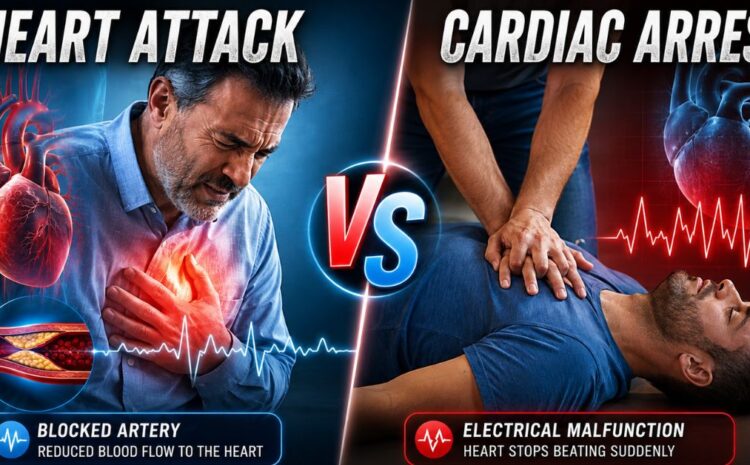
Heart Attack vs Cardiac Arrest: What’s the Difference?
A heart attack and cardiac arrest are not the same medical emergency, although people often use the terms interchangeably. Understanding the difference can be important because both require immediate medical attention, but their causes, symptoms, and emergency responses are different.
What Is a Heart Attack?
A heart attack, medically known as a myocardial infarction, occurs when blood flow to a part of the heart muscle becomes blocked. Without enough oxygen-rich blood, the affected heart muscle can begin to get damaged.
Common warning signs may include:
- Pressure, tightness, or pain in the chest
- Pain spreading to the arm, shoulder, back, neck, or jaw
- Shortness of breath
- Cold sweating
- Nausea or vomiting
- Unusual tiredness or weakness
Symptoms can vary between individuals. Some people may experience mild or unusual symptoms, so persistent or concerning symptoms should never be ignored.
What Is Cardiac Arrest?
Cardiac arrest occurs when the heart suddenly stops pumping blood effectively. As a result, the brain and other vital organs quickly stop receiving adequate oxygen.
A person experiencing cardiac arrest may:
- Suddenly collapse
- Become unresponsive
- Stop breathing normally or only gasp
- Have no detectable pulse
Cardiac arrest is an immediate life-threatening emergency. CPR and rapid defibrillation, when indicated, can be critical while emergency medical help is being arranged.
Heart Attack vs Cardiac Arrest: What Is the Difference?
The simplest way to remember the difference is:
Heart attack = a blood-flow problem.
Cardiac arrest = an electrical/pumping problem causing the heart to stop effectively circulating blood.
A heart attack does not always cause cardiac arrest, but a heart attack can sometimes trigger dangerous heart rhythms that lead to cardiac arrest.
| Heart Attack | Cardiac Arrest |
|---|---|
| Usually caused by blocked blood flow to heart muscle | Heart suddenly stops pumping effectively |
| Person may remain conscious | Person usually becomes unresponsive |
| Heart generally continues beating | Normal circulation stops |
| Requires urgent medical treatment | Requires immediate emergency response |
What Should You Do During a Suspected Heart Attack?
If someone develops symptoms suggestive of a heart attack, seek emergency medical help immediately rather than waiting for the symptoms to disappear. Early treatment can help limit heart muscle damage.
If someone suddenly collapses, is unresponsive, and is not breathing normally, treat it as a cardiac arrest emergency. Call emergency services, begin CPR if trained, and use an automated external defibrillator (AED) if one is available and appropriate.
When Should You Consult a Cardiologist?
Don’t wait for a major event to take care of your heart health. People with risk factors such as high blood pressure, diabetes, high cholesterol, smoking, obesity, or a strong family history of heart disease may benefit from appropriate cardiovascular evaluation.
If you’re looking for one of the cardiologists in MP or a top cardiologist in Indore, consult a qualified cardiac specialist for personalized assessment, preventive care, and treatment guidance.
Remember: chest discomfort, sudden breathlessness, unexplained sweating, or sudden collapse should never be taken lightly. Prompt medical attention can make a critical difference.
Take the Right Step Towards a Healthier Heart
Don’t ignore chest pain, breathlessness, or other heart-related symptoms. Get expert cardiac care and take a confident step toward better heart health.
📞 Call for an Appointment: +91 9893925000
📧 Email: info@drsaritaraocardiologist.com
🌐 Visit Website: https://drsaritaraocardiologist.com/
Your heart deserves timely care—schedule your consultation today!
Write a Comment