

Coronary angiography is an advanced diagnostic procedure used to evaluate blood flow within the heart arteries and identify blockages or narrowing. Dr. Sarita Rao uses modern imaging techniques to provide accurate cardiac evaluation and treatment planning, including coronary angiography in Indore for patients who require detailed assessment of their coronary arteries.
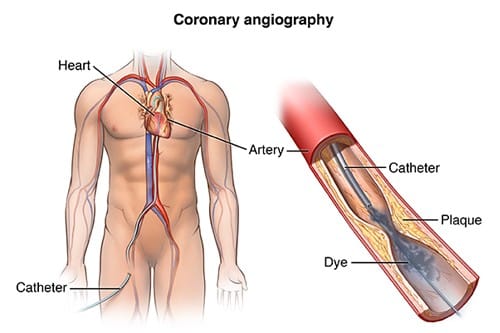
The procedure involves inserting a thin catheter through the wrist, arm, or groin artery under local anesthesia. A special contrast dye is then injected into the blood vessels, allowing detailed visualization of coronary arteries through imaging guidance.
Angiography plays a vital role in diagnosing coronary artery disease, identifying reduced blood flow to the heart, and detecting arterial narrowing before severe cardiac complications develop.
Modern angiography techniques are minimally invasive, safe, and highly effective in helping cardiologists make accurate treatment decisions for long-term heart health.
Your cardiologist may recommend angiography if you experience symptoms or test results suggesting reduced blood flow to the heart.
Early diagnosis through angiography can help identify serious heart conditions such as coronary artery blockages, narrowing of blood vessels, and coronary artery disease. For patients seeking angiography treatment in indore, the procedure helps doctors assess the extent and location of blockages and plan appropriate treatment.
Step 1: Preparation
Patients usually lie on their backs on a table. An IV is inserted for sedation and fluids. Local anesthesia is administered to minimize discomfort.
Step 2: Catheter Insertion
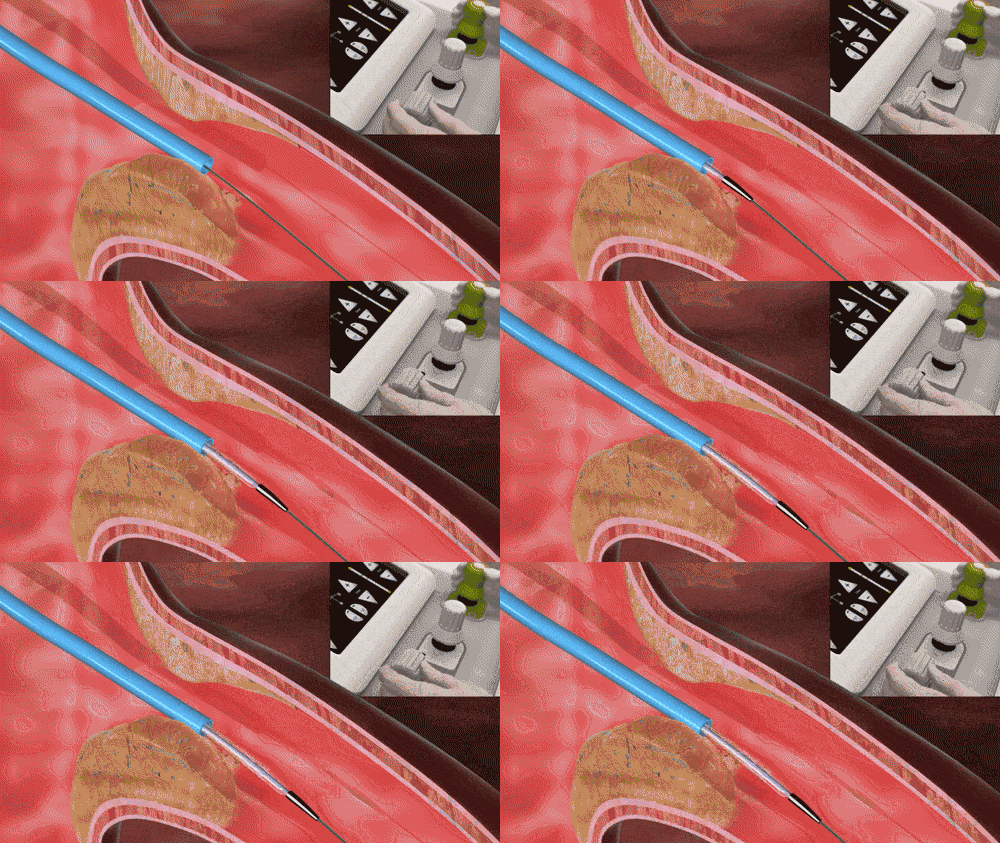
A small needle punctures the vessel, a thin catheter is inserted through an artery in the wrist, arm, or groin, and guided toward the heart arteries. You may feel pressure or mild pushing, but usually not pain.
Step 3: Contrast Dye Injection
A specialized contrast dye is injected into the coronary arteries to make blood flow visible during imaging. Patients might feel a warm, flushing sensation when the contrast dye is injected.
Step 4: Imaging & Evaluation
Advanced imaging technology captures detailed images of the heart arteries to identify narrowing, blockages, or structural abnormalities.
Step 5: Completion
The catheter is removed, and pressure is applied to stop bleeding.
Step 6: Diagnosis & Treatment Planning
Based on angiography findings, Dr. Sarita Rao Cardiologist recommends the most appropriate treatment approach for optimal heart health.
The procedure is usually completed within a short duration, and most patients recover quickly.
Angiography helps detect blockages in the heart arteries and supports appropriate treatment planning. Under the care of Dr. Sarita Rao, angiography for heart blockage in Indore can help assess the condition of the heart arteries and guide further treatment decisions.
Coronary angiography is considered a safe and commonly performed cardiac diagnostic procedure when carried out by experienced specialists.
Like any medical procedure, angiography may involve certain risks, including:
Dr. Sarita Rao follows advanced safety protocols, modern imaging guidance, and careful patient monitoring throughout the procedure to ensure maximum safety and comfort.
Most patients can return home the same day or within a short observation period after angiography. Nurses will check your blood pressure, pulse, and the access site regularly for bleeding or swelling
Recovery is generally quick, especially in radial angiography procedures performed through the wrist.
Angiography is generally not painful. Local anesthesia is used during the procedure, so you’re awake but comfortable during the test, and most patients experience only mild pressure or temporary discomfort.
The procedure usually takes around 20 to 45 minutes depending on the complexity of the evaluation.
Yes. Angiography is commonly performed in elderly patients under careful monitoring and appropriate medical supervision.
Yes. Coronary angiography is one of the most accurate diagnostic methods for identifying narrowing or blockage in the heart's arteries.
Angiography is a diagnostic procedure used to identify blockages, while angioplasty is a treatment procedure used to open blocked arteries.
Many patients can return home the same day after a short observation period, depending on their medical condition and procedure type.
Far far away, behind the word mountains, far from the countries Vokalia and Consonantia, there live the blind texts. Separated they live in Bookmarksgrove right at the coast
Far far away, behind the word mountains, far from the countries Vokalia and Consonantia, there live the blind texts. Separated they live in Bookmarksgrove right at the coast
Far far away, behind the word mountains, far from the countries Vokalia and Consonantia, there live the blind texts. Separated they live in Bookmarksgrove right at the coast
Far far away, behind the word mountains, far from the countries Vokalia and Consonantia, there live the blind texts. Separated they live in Bookmarksgrove right at the coast
Far far away, behind the word mountains, far from the countries Vokalia and Consonantia, there live the blind texts. Separated they live in Bookmarksgrove right at the coast
Far far away, behind the word mountains, far from the countries Vokalia and Consonantia, there live the blind texts. Separated they live in Bookmarksgrove right at the coast