

A Drug-Coated Balloon (DCB) is an advanced coronary intervention used to treat narrowed or blocked arteries without leaving a permanent implant inside the blood vessel.
Unlike traditional angioplasty that often requires stent placement, a Drug-Coated Balloon delivers anti-proliferative medication directly to the artery wall during balloon inflation. This medication helps prevent excessive tissue growth and reduces the risk of the artery becoming narrowed again.
The concept is often referred to as “leave nothing behind” therapy because no metal scaffold remains inside the artery after treatment.
Drug-Coated Balloon therapy is particularly useful in selected coronary artery lesions, small vessel disease, and in-stent restenosis where a previously implanted stent has become narrowed again.
The procedure is usually performed after angioplasty, where a balloon catheter is used to widen the blocked artery. Once the artery is expanded, a small metal mesh tube called a stent is placed inside the artery to act as a scaffold and help maintain proper blood circulation.
Modern coronary stents may include drug-eluting technology, which slowly releases medication to help reduce the risk of the artery narrowing again, also known as restenosis.
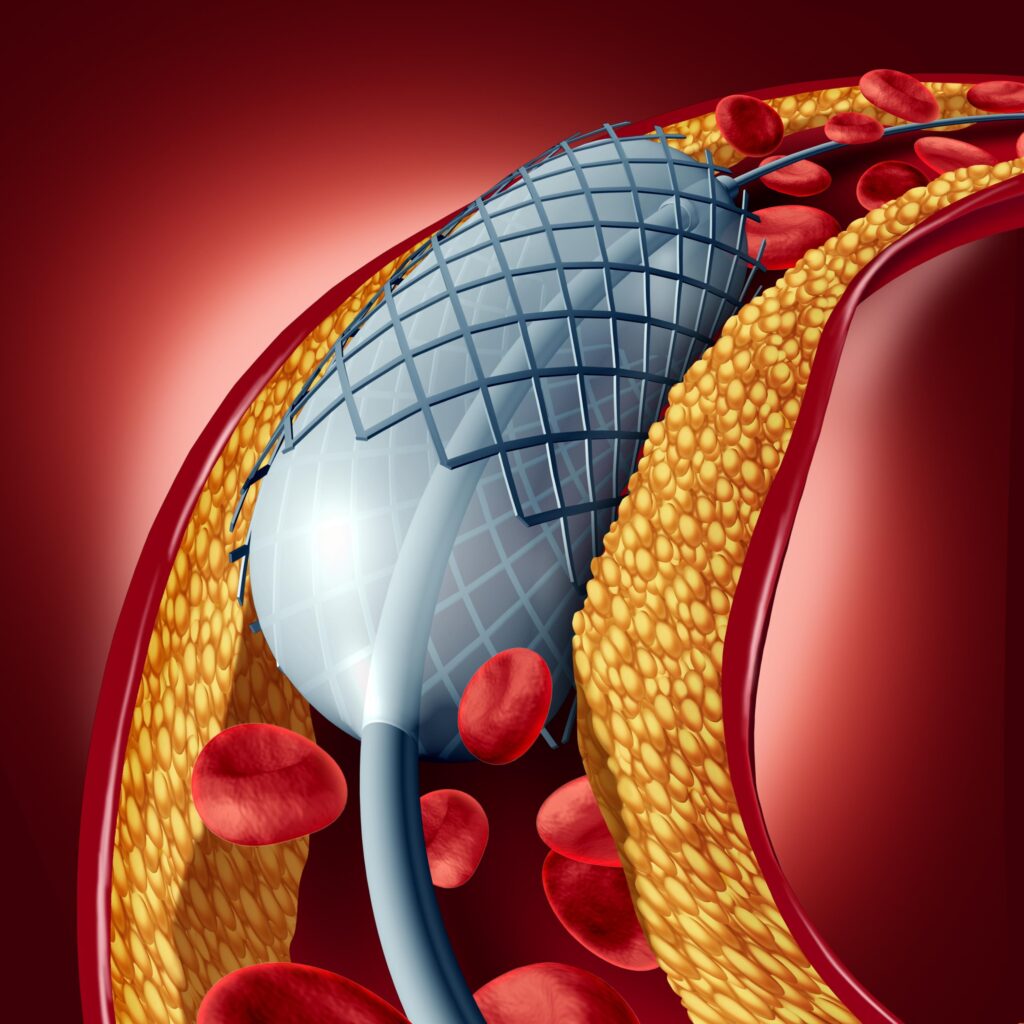
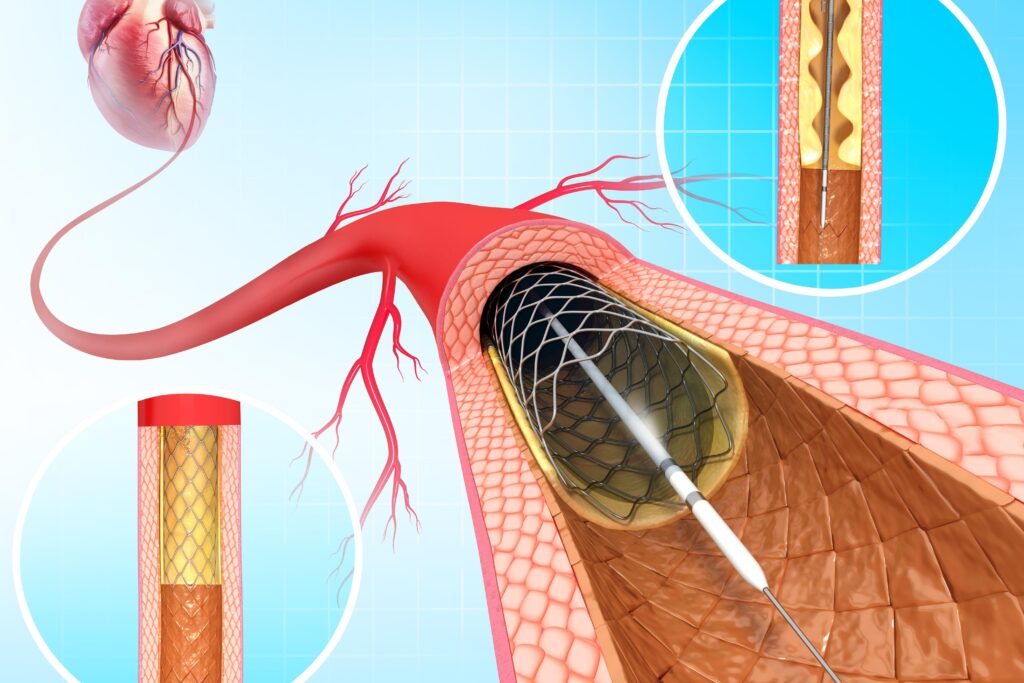
Drug-Coated Balloon treatment may be recommended for patients where stent implantation is not ideal or when a stent-free treatment approach is preferred.
The suitability of DCB treatment depends on the type, location, and severity of the coronary artery blockage.
One of the most common and effective applications of Drug-Coated Balloon therapy is treating arteries that have narrowed again after previous stent implantation.
DCBs are particularly beneficial in small coronary arteries where placing a stent may be challenging.
Can be used in selected long-segment artery narrowings where avoiding multiple stents may be advantageous.
Useful in certain bifurcation lesions where preserving vessel anatomy is important.
Some newly diagnosed coronary artery narrowings may be suitable for DCB treatment based on clinical evaluation.
Step 1: Preparation & Local Anesthesia
The procedure is performed under local anesthesia with continuous cardiac monitoring.
Step 2: Catheter Insertion
A thin catheter is inserted through the wrist or groin artery and guided toward the blocked coronary artery.
Step 3: Lesion Preparation
The narrowed artery is carefully prepared using specialized balloons to optimize treatment success.
Step 4: Drug-Coated Balloon Deployment
The Drug-Coated Balloon is positioned at the blockage site and inflated for a specific duration.
Step 5: Medication Delivery
The balloon delivers anti-proliferative medication directly into the artery wall to reduce future narrowing.
Step 6: Balloon Removal
The balloon is removed after treatment, leaving no permanent implant inside the artery.
Drug-Coated Balloon therapy is considered a safe and effective treatment option when performed by experienced interventional cardiologists in appropriately selected patients.
Although complications are uncommon, possible risks may include:
Dr. Sarita Rao uses advanced imaging guidance and evidence-based treatment protocols to maximize procedural safety and long-term success.
Most patients recover quickly after DCB treatment and can return to routine activities within a short period.
Long-term lifestyle modification remains important for preventing future coronary artery disease progression.
A Drug-Coated Balloon is a specialized angioplasty balloon that delivers medication directly to the artery wall without leaving a permanent stent behind.
No. One of the major advantages of DCB therapy is that many patients can be treated without stent implantation when clinically appropriate.
Avoiding a permanent implant helps preserve natural vessel function and may reduce complications associated with multiple stent layers in selected patients.
Yes. DCB therapy is one of the most effective treatments for in-stent restenosis and is widely used for this purpose.
The procedure is performed under local anesthesia and most patients experience minimal discomfort.
The procedure typically takes between 30 minutes and 2 hours depending on lesion complexity.
Far far away, behind the word mountains, far from the countries Vokalia and Consonantia, there live the blind texts. Separated they live in Bookmarksgrove right at the coast
Far far away, behind the word mountains, far from the countries Vokalia and Consonantia, there live the blind texts. Separated they live in Bookmarksgrove right at the coast
Far far away, behind the word mountains, far from the countries Vokalia and Consonantia, there live the blind texts. Separated they live in Bookmarksgrove right at the coast
Far far away, behind the word mountains, far from the countries Vokalia and Consonantia, there live the blind texts. Separated they live in Bookmarksgrove right at the coast
Far far away, behind the word mountains, far from the countries Vokalia and Consonantia, there live the blind texts. Separated they live in Bookmarksgrove right at the coast
Far far away, behind the word mountains, far from the countries Vokalia and Consonantia, there live the blind texts. Separated they live in Bookmarksgrove right at the coast