
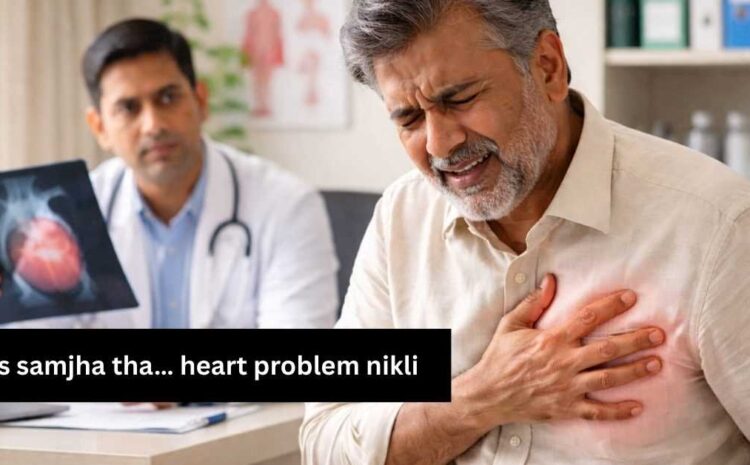
I Thought It Was Gas… But It Turned Out to Be a Heart Problem.
Chest discomfort is one of the most commonly ignored health symptoms. Many people brush it off saying, “Bas gas hai” or “Acidity hogi.” But what if that burning, heaviness, or pressure in the chest is not from the stomach — but from the heart?
This confusion is more common than you think, and sometimes, dangerously misleading.
Gas vs Heart Pain — Why People Get Confused
The symptoms of acidity and heart-related chest pain can feel surprisingly similar. Both can cause:
- Burning sensation in chest
- Tightness or pressure
- Discomfort after eating
- Uneasiness in upper abdomen
Because of this overlap, people often self-medicate with antacids and delay proper diagnosis. But the truth is — heart pain doesn’t always feel dramatic. It can start mildly and quietly.
According to heart specialists, many patients admitted for cardiac emergencies first assumed their symptoms were just digestive issues.
When “Gas” Is Actually a Warning Sign
Heart-related chest pain (angina) happens when blood flow to the heart muscle is reduced. This pain may feel like:
- Pressure or heaviness in the chest
- Tight band-like sensation
- Pain spreading to left arm, jaw, back, or neck
- Breathlessness
- Sweating or nausea
Unlike acidity, heart pain often increases during physical activity or emotional stress and may reduce with rest.
Ignoring these signals can lead to a heart attack — where part of the heart muscle gets permanently damaged due to lack of blood supply.
Why Delays Happen
One of the biggest reasons people delay seeing a doctor is denial.
“I’m too young.”
“I don’t have heart problems.”
“It will settle on its own.”
But today, cardiologists are seeing heart issues even in people in their 30s and 40s due to:
- Stress
- High BP
- Diabetes
- Smoking
- Sedentary lifestyle
- Unhealthy diet
This is why awareness is crucial. Seeking timely medical advice from a one of Top Cardiologist in Indore or a qualified heart specialist can make a life-saving difference.
The Cost of Ignoring Symptoms
Heart muscle does not regenerate easily. The longer the delay, the greater the damage.
Doctors often say: “Time lost is heart muscle lost.”
Early evaluation through ECG, Echo, TMT, or blood tests can quickly identify whether symptoms are cardiac or gastric. A consultation with a one of Top cardiologist in MP ensures accurate diagnosis instead of risky assumptions.
A Real Lesson Many Patients Share
Many heart patients later say:
“I wish I hadn’t ignored the pain.”
“I thought it was just gas.”
This is not to create fear — but awareness. Chest symptoms are the body’s alert system. Listening early can prevent emergencies later.
Prevention Is Powerful
Simple lifestyle changes can reduce heart risk significantly:
✔ Regular walking or exercise
✔ Balanced diet (less oil, less salt)
✔ Managing BP, sugar, cholesterol
✔ Avoid smoking
✔ Stress management
✔ Regular heart checkups
Experts like Dr. Sarita Rao, considered by many as one of the best heart care professionals in the region, emphasize that early screening is more powerful than late treatment.
When to Seek Immediate Help
Do not ignore chest discomfort if it is accompanied by:
- Breathlessness
- Cold sweating
- Pain spreading to arm/jaw
- Dizziness
- Nausea
These can be signs of a cardiac emergency.
Final Thought
Not every chest pain is a heart problem — but every chest pain deserves attention. Assuming it is gas without medical evaluation can be risky.
Your heart works non-stop for you. Taking symptoms seriously and consulting a specialist — such as a one of Top Cardiologist in Indore — is not overreacting, it’s being responsible.
Because sometimes, what feels like “just gas” can actually be your heart asking for help.
Write a Comment